Category Archives: Wildlife

Wildlife Works looks to the birds to better understand climate change

As part of a long-term study to determine whether climate change is affecting bird populations, a Wildlife Works team hiked up Mt. Kasigau in Southeast Kenya to monitor the local wildlife and collect data on the many species of native and migratory birds. Wildlife Works has been conducting these expeditions three times per year for the past two years. The thinking behind this, is that global warming could cause birds to abandon their natural homes and move higher up the mountain or perish.

Mt. Kasigau

Mt. Kasigau

Hiking up Mt. Kasigau’s iconic humpback outcrop to conduct a bird monitoring expedition is no simple matter. A small team traveling at a leisurely pace with no luggage could reach the top of Mt. Kasigau in roughly 3 hours, but when you add bird-ringing equipment, bamboo poles, mist nets and camping equipment the journey becomes much more cumbersome.

The Wildlife Works team began their climb from the foothills of a small village called Kiteghe and set up four ringing stations from the mountain’s base to its peak.

Bird ringing, also known as bird banding, is a technique used in the study of wild birds by attaching a small, individually numbered tag to a bird’s wing or leg so that various aspects of the bird’s life can be measured and studied. Ornithologists use the tags to identify the same bird over a period of time and gain information on migration patterns, population studies, feeding behavior, territoriality and more.

Wild birds are carefully captured in mist nets, which are typically made of a fine nylon mesh suspended between two poles and resemble oversized volleyball nets, and fitted with a lightweight ring of suitable size. The rings are designed to have no adverse effect on the birds, in fact the whole basis of using rings to gather data is that ringed birds behave identically in all respects as the non-ringed population.

Eurasian Scops Owl

Eurasian Scops Owl

The Wildlife Works team began their first day by setting up 12-meter nets at the base of Mt. Kasigau at 6:00 in the morning, ringing birds until noon, and packed up the equipment to travel up the mountain to the next station. For over a week the team carefully caught, ringed and released a total of 119 birds of 25 different species.

During this expedition the team got to see Nightingales, Eurasian Scops Owls and Spotted Flycatchers, which all migrate to Africa from Europe. They caught many Plain Nightjars and Ashy Flycatchers, which are species native to Kenya. The highlight of the season was seeing a huge number of fledged young chicks wearing their very first coats of un-molted feathers!

Peters's Twinspot

Peters’s Twinspot

According to our Wildlife Works’ team, any changes will take place over a period of ten years, so it is important that we continue to collect data. In the meantime, this research is a great indicator of biodiversity levels on Mt. Kasigau. We will continue to study the wildlife in and around our REDD+ project area, and continue to fight against climate change.

Wildlife Works rangers fight against illegal ivory trade

With the increase in violence linked to the rising value of ivory, Wildlife Works’ team of rangers, led by Head Ranger and Security Manager Eric Sagwe, have been working harder than ever to curb poaching and protect wildlife. The team encountered three notable events over the past few months, from poachers killing small game for meat to a large-scale slaughter for ivory, and will continue their tireless efforts to discourage poaching and protect wildlife.

Recently, two poachers were caught killing small animals to sell as bush meat. The pair had slaughtered two dik diks and two hares using pangas (large, broad-bladed African knives used as tools or weapons) and confessed to killing the animals in order to sell the meat. One poacher said he was a quarry worker in Kuranze and had five children. The other said he was 28 with a wife and three children and worked as a carpenter.

Dik diks are small antelopes that live in the bush lands of Eastern and Southern Africa.

Dik diks are small antelopes that live in the bush lands of Eastern and Southern Africa.

According to one of the Wildlife Works rangers, poaching is on the rise because the punishment for poaching small animals is not harsh enough to deter people.

The two poachers were taken to the nearby town of Voi’s police station and then to court in accordance with the law. Further steps have been taken to educate community members against buying wild animal meat.

One week later, ivory poachers struck Rukinga leaving five elephants dead.

Suspicious footprints had been found within the Wildlife Works Animal Sanctuary on Wednesday, March 20th. The rangers notified Kenya Wildlife Services, and when the teams had gathered, Head Ranger Eric spoke with the KWS Company Commander to organize the tracking strategies that both groups would use to catch the potential poachers before any animals could be harmed.

The rangers spent two full days covering an area of 15 km from the Rukinga Ranch down to Talu Ranch near Mount Kasigau.

At one spot in Kasigau, rangers tracked down a place with the telltale signs of a small campfire where the poachers may have pitched camp the night before.

By Friday, some of the search teams began to wonder if the footprints spotted on Wednesday had been a ruse. Tracks left by farmers and herders who graze their livestock on some of the ranches made it difficult for the rangers to distinguish and track the poachers’ footprints. Efforts were further complicated by rain that had erased many of the tracks.

On Saturday afternoon, the rangers heard a rifle shot ricochet in the depths of Dawida Ranch. The groups came together to focus their efforts on searching the ranch, only to discover that they had been tricked! The gunshot heard from Dawida Ranch was meant to divert the rangers away from the Washumbu Ranch where the poachers had killed three male and two female elephants and removed their tusks. The poachers used the diversion to make their getaway, leaving five carcasses behind.

Empty rifle shells found at the location of the elephant carcasses.

Empty rifle shells found at the location of the elephant carcasses.

Rangers interviewed community members living around the Washumbu Ranch and learned that many residents had heard repeated gunshots Friday evening, but they had ignored the sounds and assumed the shots were coming from Wildlife officers engaging poachers in the park.

A KWS patrol aircraft was used to scan the Washumbu Ranch where the five carcasses were discovered almost huddled together. The poachers had clearly ambushed the elephants in a group.

Efforts to track down the poachers have been heightened and authorities have asked community members to report any information that could lead to the capture of the criminals.

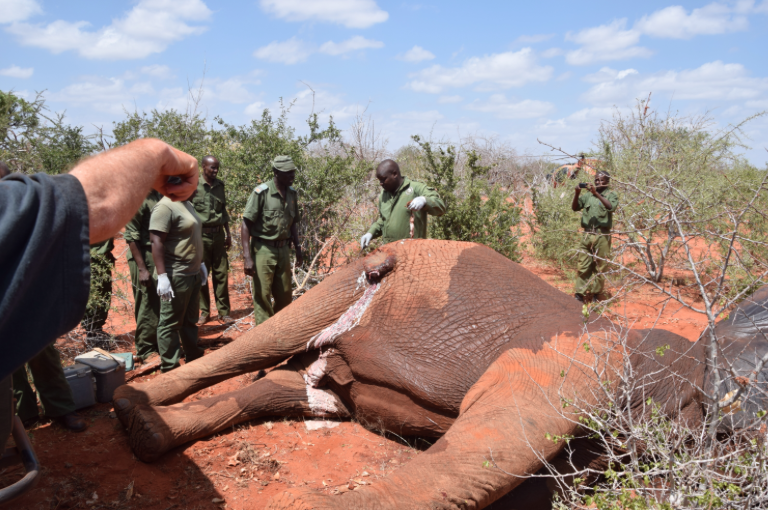
This week, Wildlife Works rangers on patrol discovered an elephant carcass within the project area with its tusks intact.

Head Ranger Eric suspects that while trying to bring down the elephant using poisoned arrows, the poachers most likely spotted wildlife rangers on patrol and abandoned their efforts. Unfortunately the poor creature still died from wounds inflicted by the poachers.

After finding the carcass, the patrolling Wildlife Works rangers reported the incident to the closest station, removed the dead elephant’s tusks and brought them to the Kenya Wildlife Services office to be destroyed. The large tusks (weighing 60Kg) will be burned in government kilns to prevent them from being sold on the illegal ivory market.

Wildlife Works rangers dispose of the dead elephant’s tusks.

Wildlife Works rangers dispose of the dead elephant’s tusks.

Photo of Kenyan government officials burning ivory, from Jason Straziuso’s article for Independent Newspaper.

Photo of Kenyan government officials burning ivory, from Jason Straziuso’s article for Independent Newspaper.

Currently a somber mood hangs over the entire Wildlife Works family and the Kasigau Wildlife Corridor communities as each person mourns the loss of innocent wildlife. It is not only a Wildlife Works loss; it is a loss for the whole universe, for Mother Nature, and for you and I.

We cannot wish back the hands of time. We cannot wish for the group of five poached elephants to come back to life, nor the poisoned elephant that escaped with its tusks but not its life. We cannot sit back and watch helplessly as ruthless killers and merchants drive the African elephant to the brink of extinction.

Every one of us can do something to ensure that the killing stops and the demand for ivory ends. It all begins with you and I. Pledge to never purchase ornaments made from ivory. Say no to ivory by signing the petition at iworry.org. Sign the petition to stop the demand for ivory at change.org. Raise awareness on the plight of the African elephant. Support wildlife groups who work to protect animals and curb poaching. Help us spread our message.

Tragedy strikes Rukinga Sanctuary

WARNING: The following blog post contains graphic photos of elephants killed by ivory poachers. View at your own discretion.

As the new year kicks off, we take a look back at the challenges and accomplishments of 2012. We were proud to start the year by building a nursery for Wildlife Works’ employees’ families, and thrilled to be partners with PUMA for their Creative Factory project. We welcomed our first female Wildlife rangers and happily received validation and verification for the first REDD+ project in the Democratic Republic of Congo.

The greatest challenge we face going into 2013 is the growing threat to wildlife from the increasingly violent ivory trade, and we can’t emphasize enough how great the risks are to the animals and those who protect them.

Wildlife Works has been protecting endangered wildlife at our sanctuary in South East Kenya between Tsavo East and West National Parks since 1997. The 1989 global ban on the African ivory trade had helped deter gunned poachers from setting foot on our sanctuary, but over the past year, we have witnessed an exponential increase in violence. Most of the armed poachers come over the Kenyan border from Somalia. The violence they bring upon the animals and the surrounding communities threatens our work toward the goal of a sustainable future where communities can grow economically alongside thriving wildlife.

“We’ve been working in Kenya for the past 17 years… We lost 10 elephants to ivory poachers in the first 15 years, and 45 in the last 18 months, and this is despite being a relatively well-funded organization with extraordinary relationships with the local community members who benefit from wildlife,” says Wildlife Works founder and CEO Mike Korchinsky.

Within the past year, one of our rangers was killed, another injured, and six elephants were recently stripped of their tusks and left for dead. This type of violence on protected land is unprecedented, and is a direct result of East Asia’s increasing demand for ivory that threatens the endangered African elephant now more than ever.

The most recent incident happened on October 28, 2012. Gunshots were heard coming from our Rukinga Sanctuary in the late afternoon. The Kenya Wildlife Service were alerted and immediately sealed off the scene of the crime. The incident had taken place as the sun was going down, so unfortunately there was little the rangers could do at that time.

On the following day Rob Dodson, our VP of Africa Operations, flew over the crime scene with one other ranger. While airborne, they spotted three elephant corpses lying on the ground.

They drove to the GPS location to find two elephants dead with tusks removed and one badly wounded but with tusks still attached. The rangers also spotted the tracks of a fourth elephant, which they found 800 meters away at Ziwa-nyoka Dam with a gunshot wound to the leg. The two wounded elephants were badly hurt, and the best option was to put them down humanely and save them from a slow and painful death.

Kenya Wildlife Service and tracker dogs were commissioned to follow the poachers’ tracks. While on the hunt, rangers discovered two more fresh elephant carcasses with tusks removed. Despite their many kills, it is likely that the poachers had gathered a low harvest in terms of tusk weight for their bosses. Many of the elephants were young, not even adults yet, and their tusks were visibly immature. The poachers must have been desperate for ivory to attack such young creatures.

The death of six elephants is six too many but all is not lost. Wildlife Works is currently protecting almost 2,500 elephants in and around the Kasigau Corridor and will do everything in our power to keep them safe. We are thankful for the efforts of Wildlife Works and KWS rangers, even when it means putting themselves in the line of fire.

This is a desperate time for the African elephant, but there is still hope. By working together, we can make a difference and create an environment where these endangered animals can flourish. We can provide sustainable jobs that provide the community with economic alternatives to killing wildlife and destroying forests for basic survival needs. We can support a balanced ecosystem where animals are worth much more alive than dead.

Mike Korchinsky adds, ”In the end, as big a market as [the ivory trade] appears to be, it’s tiny in the context of international global markets and if the government wanted to stop it they could stop it, and stop the flow of money.”

You can help by not purchasing any items made with ivory, supporting other companies that are committed to protecting the biodiversity of our planet, signing the petition at iworry.org, and signing the petition at change.org launched by fellow elephant crusader Kuki Gallmann, who is boldly pleading for the end of producing items made from ivory.

The most effective thing you can do to help bring an end to the ivory trade is to write to your country’s representative at CITES (www.CITES.org). National contacts and information can be found by clicking on the name of the relevant country at www.cites.org/common/National_contacts.pdf.

Elephants are a world’s heritage.
Elephants belong to all humanity.
Elephants belong to you.
Do realize that: When the buying stops, so does the killing.
-Kuki Gallmann

Students from Marungu Secondary School take a walk on the wildlife side

Part of Wildlife Works’ community enrichment strategy includes ensuring that underprivileged students get a chance to view their beautiful ecosystems and see wildlife in their natural habitat.

Students in rural areas do not enjoy the comforts and opportunities that the more privileged students in urban areas regularly experience. The schools surrounding Rukinga, including the Marungu Secondary School, are located almost two hours inland from Mombasa, deep in the Kenyan bush. Students at Marungu are boarded for four years, and many of them never get the opportunity to travel or visit the most picturesque parts of Kenya.

Last month, the Wildlife Works’ Human Resources Department organized a group of 30 Form Four students and two teachers from the Marungu Secondary School to travel to the Wildlife Works’ student camp for a wildlife conservation expedition! The event took place a few days after students had finished their national examinations and holiday break had already begun.

The participants traveled from their respective homes to their school compound at 4:00 p.m. where they were picked up by four Wildlife Works’ Land Cruisers and driven to their accommodations at “Camp Kenya.”

Wildlife Works’ Human Resources Manager Laurian Lenjo, Community Relation Officer Joseph Mwakima and Environmental Officer James Mwangongo welcomed the students to camp and filled everyone in on the adventures that lay ahead of them over the next two days.

After supper on the first night, the core organizers spoke to the students about carbon awareness and the importance of planting trees. Mr. Mwangongo encouraged students to take this new information home, plant trees in their neighborhoods and educate their community about conservation. Mr. Mwakima gave a motivational speech in which he encouraged students to wait for their exam results, with a promise that if they performed very well Wildlife Works would sponsor them on their next tertiary school level.

On the second day, students watched a film about the importance of conservation, then put their new knowledge to action and planted five trees. Finally, the group went for a game drive where they spotted beautiful wild animals including elephants, zebras, giraffes and lions.

Mr. Lenjo said, “[We came up] with this activity for the students who have been studying hard for four years, and are unable to [afford to go] on any trips. [We want them] to be exposed to the environment and what it offers in terms of flora and fauna. This also puts them in a position to make better career choices if they are confused about which field to venture into after [getting] their results. We are always happy to expose them to new things and give them something to ponder career-wise.”

Orphan Elephant Rescued at Mgeno Ranch

Rukinga drinking milk 10/4/2012

3-week-old “Rukinga” feeds on milk at the David Sheldrick Elephant Orphanage in Nairobi 10/4/2012 (Photo Credit: David Sheldrick Wildlife Trust)

While patrolling the sanctuary on September 24th, our rangers discovered an elephant calf lying helplessly near a watering hole. They approached it carefully, unsure of whether the animal was dead or alive. A closer observation revealed that the elephant was only about three weeks old, and possibly abandoned by its family.

Hoping that the calf’s mother was out in search of food nearby and on her way back, the rangers decided to hide out and wait for her return. After about 30 minutes, with no sign of an adult elephant in the vicinity, the rangers determined that the calf had been abandoned.

They alerted Eric, the head ranger, who advised them to relocate the elephant immediately so that it could be taken to Mgeno headquarters, a sub-location of the David Sheldrick Wildlife Trust. They did not waste any time as they tied its limbs together, hoisted it into their land cruiser, and headed toward Mgeno ranch to meet Erick.

Eric contacted Joseph Sauni from the David Sheldrick Wildlife Trust, a charity organization based in Tsavo National Park that is dedicated to rescuing and raising orphaned elephants and rhinos. Joseph showed up immediately from Voi with a team of six and transferred the elephant to Mgeno headquarters where it was kept for 24 hours.

Joseph explained that this was not the first time an orphaned elephant had been rescued from Rukinga:

“When an animal like this is abandoned by its mother, chances are high that there is a drought…this can force the mother to abandon its baby because [the infant] it is too weak to proceed with the long journey in search of food and water.”

The animal was then taken to the Voi airstrip where it was airlifted to the David Sheldrick Elephant Orphanage in Nairobi. Our rangers can rest assured that the animal (which they named “Rukinga!”) is in good hands; it will be fed and babied until it reaches the stage where it can be safely released back into the wild to fend for itself.

Rukinga feeding on milk at the Voi airstrip (Photo Credit: David Sheldrick Wildlife Trust)

Loading the orphan onto the rescue plane (Photo Credit: David Sheldrick Wildlife Trust)

Rukinga follows the keepers closely (Photo Credit: David Sheldrick Wildlife Trust)


Once again we say bravo to our rangers and our friends at the David Shedrick Trust!

Rescued Lesser Kudu

The lesser kudu is an ancient species of forest antelope found in East Africa, the most primitive of all spiral-horned antelope. They live in dry thorn bush and forest, and are one of the many protected inhabitants of our Rukinga Sanctuary. Kudus, which range between 90 to 110 kg, are quite nimble; they can jump distances of more than 30 feet! Despite their agile nature, these beautiful creatures are on the decline due to illegal poaching, and have been marked as Near Threatened by the International Union for Conservation of Nature and Natural Resources (IUCN).

While patrolling the sanctuary on Sept 24th, a team of Wildlife Works ranch hands located at Galawa Hill discovered footprints and became suspicious that poachers were within the vicinity. The tracks led them to a hill from which they could hear the sound of an animal crying hysterically in the distance, as though in great pain. Following the direction of the noise, they discovered a female lesser kudu lying helplessly on the ground after having been trapped by a poacher’s snare on its right foot.

They informed Eric, the head ranger, who immediately drove to the scene with two other rangers. Upon arriving, they discovered three other snares that had been placed nearby. They focused on the trapped kudu first, and teamwork called to free the animal. Two rangers held its forelimbs while the other two held its hind legs, and one of the rangers took considerable force to cut out the wire that was keeping the animal trapped.

Once the snare had been cut, the rangers lowered the kudu’s legs slowly and carefully. Although it had been released from the wire, the animal was initially unable to move, a possible result of either starvation or loss of blood circulation in its leg. One of the rangers gently hoisted the animal to its feet and placed it in the direction of a path that would be least strenuous on the kudu’s legs. With a little help, the kudu was eventually able to stand up on its own and, having recovered its strength, walked away gracefully and vanished into the bush.

Following the incident, Eric explained that the snares appeared to be fresh, and that the footprints leading to the scene were most likely those of a poacher coming to check for any captured animals. Luckily, the poacher seemed to have lost track of the location of the snares so that our team was able to reach the kudu first.

“Most local poachers who do not need huge animals like elephant or buffalo, use snare to trap small animals like dik-dik and this time around it was a lesser kudu which was luckily rescued from the snares which may have caused its death,” he explains.

We are always proud of our rangers for their teamwork and dedication to the freedom of animals, and are glad that this lesser kudu’s story ended happily!

Three Elephants Killed in Taita Ranch as Asia’s Thirst for Ivory Grows

We’re saddened to report that three elephants were killed this past Sunday in Taita Ranch, at the far end of our project area. The poachers, four armed Somalis, were discovered by Kenya Wildlife Service and Wildlife Works rangers as they were removing the tusks from the dead elephants. They immediately fled the scene, with a brief exchange of gunfire aimed at a Kenya Wildlife Service vehicle. The poachers were pursued following the attacks but have yet to be caught.

The incident reflects a growing demand for ivory in East Asia, and China in particular, where the material is considered a symbol of affluence and prestige. Despite the efforts of Wildlife Works and other conservation groups, the growing demand for ivory threatens to wipe out the African elephant completely.

We are grateful that none of our rangers were harmed in this incident, and will keep our readers updated about any new developments concerning the incident.

Beehive Fences Help Protect Farmers’ Crops

As human development continues to expand and encroach on wildlife, there has been an increase in human-wildlife interaction and conflict over the years, particularly in areas within Kenya where humans and animals directly share the local land and resources. This phenomenon is further magnified by climate change, which causes the wildlife to change their migratory patterns in search of food.

One such area is Kileva, a small sub-area within the Taita-Taveta County, situated a few kilometers from Rukinga. Here, the dwellers are prone to conflicts with elephants, which frequently destroy farmers’ crops during the dry seasons. As many of these farmers rely on their crop yield to survive, this has become a pressing issue in need of a resolution.

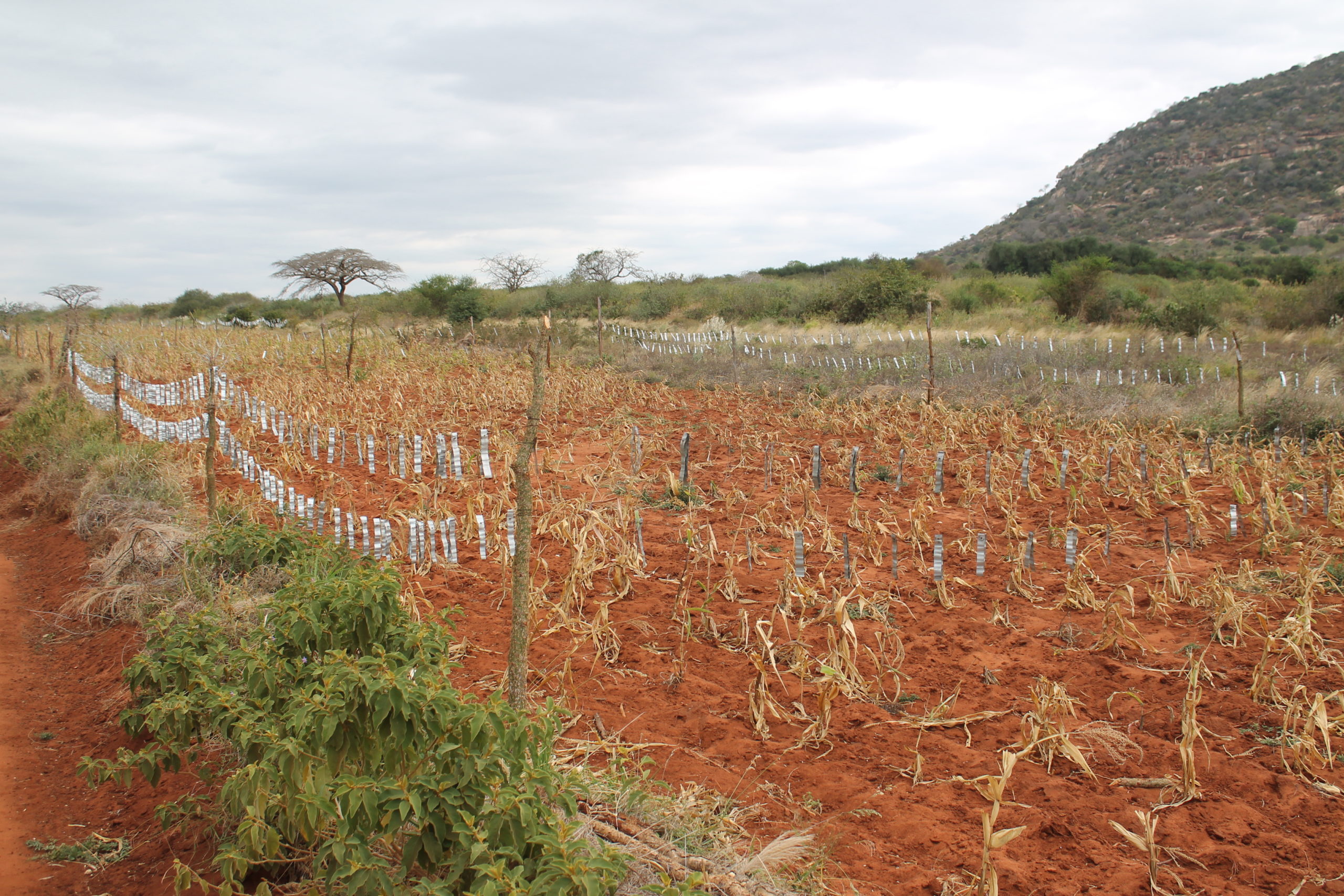
The Kileva Foundation, a small charity based in Sagalla, has been working to find a wildlife-friendly solution to this issue by introducing local farmers to the beehive fencing system, in which beehives are placed around the perimeter of a farm in order to deter elephants from entering and stomping on the crops.

Beehive fences with path set aside for elephants.

In early July, Wildlife Works met with the Kileva Project, along with Save the Elephants (STE), to discuss the implementation of the beehive system in Kasigau. Together, we plan to work with struggling farmers in the area, many of whom lose up to 60% of their crops to elephants within a given year.

Mr. Godwin Kilele, the operational director of the Kileva project, provided us with some fascinating information about how this system works with the natural tendencies of both bees and elephants.

During dry seasons, elephants are constantly out in search of food. The change of climate pushes them closer to villages and they will not hesitate to invade crop farms. But when a herd approaches a farm that is surrounded with beehives, the loud buzzing of the colony will trigger painful memories and force the group in a different direction, leaving the farm untouched.

Like elephants, bees must change their migratory patterns during the dry seasons. During this time, bees must relocate to new environments in order to survive. The man-made beehive “boxes” placed around the farm provide ready-made homes for bees on the search.

Not only do the bees keep elephants from destroying farmer’s crops, they also produce honey, which the farmer can sell to offset the costs of building the fence. Bees also help the farmer by pollenating the crops, thus increasing total crop yield.

A farm that has been fenced with beehives.

Mr. Kilele took us to two different farms that are part of a survey to measure the effectiveness of beehive fencing. The beehive system is rather expensive for rural farmers, so The Kileva Project wants to ensure they develop some best practices before the system is implemented. He walked us through the process by which the fences are set up:

Once the posts are embedded in the ground, it is necessary to install a cross bar to help hold up both the beehive and a thatched roof which helps to protect the hive from vagaries of nature. Iron sheet shields are nailed to the upright post at least two feet above the ground to prevent honey badgers from climbing up the post.

The hive is hung at chest height for ease of harvesting, to protect it from honey badgers, and to be as visible as possible for an approaching elephant. The simple thatched roof is an easy solution to keep the hive cool from the sun, and to keep the bees dry in the rain. This is essential because if left in the sun, the overheated bees will become aggressive and eventually leave.

Man-made beehive with sugar water to attract bees.

Mr. Mwangome, a 54 year-old father of four and grandfather, is thankful that the Kileva group has fenced his farm, and is now waiting for the results of the project, which will determine the effectiveness of the system. He narrated to us a past painful memory of all of his crops being mercilessly fed on by elephants, leaving him with nothing to rely on.

The people in the surrounding communities are also hopeful about this system. Without the fear of encountering elephants, their children can walk to school safely.

Wildlife Works is happy to team up with the Kileva project to implement beehive style fencing both in Rukinga and Marungu. We continue to study the effectiveness of the system, as well as its effects on the livelihood of the elephants. Through Kileva’s survey, we hope to gain more insight so that we can help the farmers in our area implement the system with confidence.

Elephant Poachers Kill Wildlife Works Conservation Ranger and Critically Injure Another

As vigilant as we are when it comes to protecting our community and the wildlife surrounding us, tragedy still finds us at times. On Friday, January 13th, elephant poachers opened fired on our unarmed conservation rangers who were patrolling the Kasigau Corridor project area in Kenya. One of our rangers, Abdullahi Mohammed, was fatally shot and another ranger, Ijema Funan, was injured by the gunfire.

At the time, our rangers, along with members of the Kenya Wildlife Service (KWS), were tracking the poachers after discovering a wounded elephant in the protected project area. “This is the first time in 15 years that any of our rangers have been killed in the line of duty, and it reflects an escalation in violence caused by the increasing demand for ivory in the far eastern markets, especially China,” said Wildlife Works founder, Mike Korchinsky.

Wildlife Works Rangers

With each passing day, we hear good news following this senseless act of violence. Two of the gang of three elephant poachers were arrested in Makinnon Road on Sunday afternoon, January 15, and they are helping us with the ongoing investigation as well as providing us with essential information concerning the shooting.

One of the two arrested men led our rangers and the Kenyan Police to the place where the rifle and ammunition had been buried. The rifle was wrapped in a pair of trousers and buried under a bush on Taita Ranch, which must have been the route the poachers took to exit the sanctuary after the fatal contact. We believe this is the rifle that shot at our rangers two days ago because it was recently fired and kept in very good condition.

The rifle that was found buried under a bush on Taita Ranch

Although this is not the end of this chapter, we feel confident that justice will prevail, as we continue to work diligently to ensure that everyone is caught and security is restored within the Kasigau Corridor. As we continue our investigation, we are happy to report that Ijema, the injured Wildlife Works ranger, is comfortable, eating well, and seems to be on his way to a full recovery.

In the aftermath and as we move forward, our VP of African Operations, Rob Dodson, would like to thank all of the Wildlife Works staff in Kenya for the countless hours you are putting in to ensure that justice is being served and the community remains safe and secure. He would also like to thank Eric, who led the operation to find the buried weapon, along with his team – Elem, Moses, Eregai and the rest of the rangers who have barely slept over the last 72 hours.

Rob and the Wildlife Works Rangers with the rifle that was found

“This appalling and heart wrenching incident underscores the real threat to the community and wildlife of this region. As long as an illegal market for ivory remains, they are in grave danger, so we will continue to support brave Kenyans in their struggle to protect their local environment. We will never forget the sacrifice that Abdullahi Mohammed, Ijema Funan and their families made today in the name of wildlife conservation.” – Mike Korchinsky, founder and CEO of Wildlife Works

POACHERS-Caught on camera on Wildlife Works Rukinga Sanctuary

By: CARA BRAUND- Conservation Intern- 17th October 2011

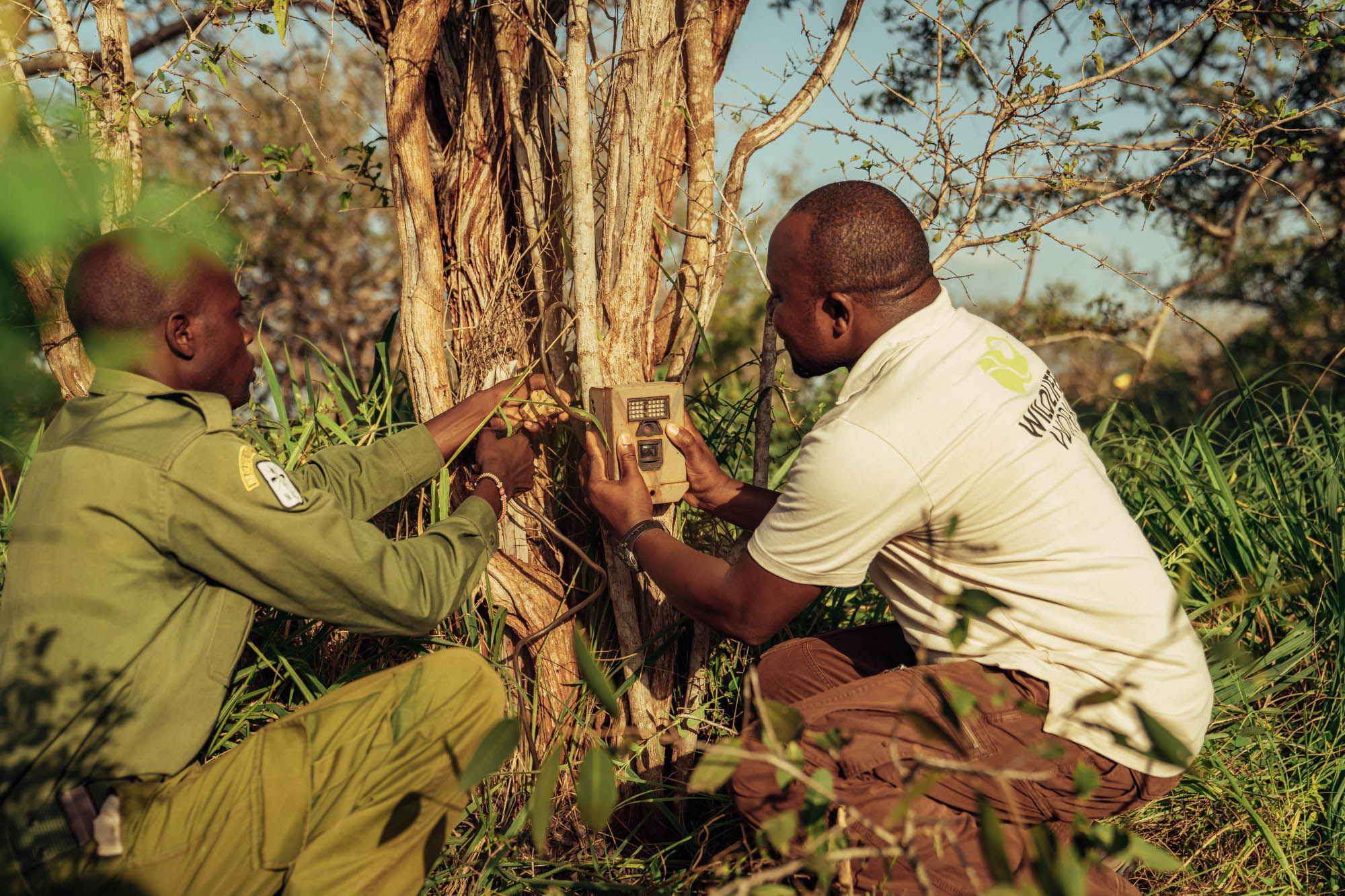
As part of their efforts to track biodiversity levels on Rukinga and the rest of the project area, the Biodiversity Division have been testing out camera traps to photograph unsuspecting wildlife in their natural habitat.

The first six test cameras are on day and night and the first trials have been going well, with elephants, lesser kudu, giraffe, kongoni civets and even aardwolf being captured.

Wildlife Works camera captures a captivating image of an aardwolf.

The team got a bit of a surprise, however, when checking the recent results of their work. Mixed among the shots of buffalo and kudu was the image of several men walking through the bush several hours after dark, as well as a clear image of one man with a torch and a machete.

Whilst illegally travelling by foot on Rukinga, the group had inadvertently stepped past one of the traps, providing the Wildlife Works team with evidence of their likely attempts to poach wildlife on the sanctuary.

A poacher, unknowingly caught on camera, holding a machete.

The photographs will now be used to identify the man in one of the photographs, at which point he will receive a fine for trespassing. Due to the fact that poaching wildlife is only indicated, not proven in the picture, it’s likely he will only receive a stern warning about his activities rather than be arrested.

The hope is that due to his photographic capture and subsequent warning, the man in the photograph will make a bid to change his ways, especially when combined with ongoing efforts to improve the quality of life in the community.

As a twist on similar situations, Wildlife Works has made the not-uncommon decision to hire poachers in the past as a way of combating the problem. As long as the person passes the test in terms of fitness and dedication, they can be excellent additions to the anti-poaching team by way of their skill-set in tracking and knowledge of the trade!

Elephants freely roaming in there natural habitat. Another great example of the images taken by Wildlife Works camera traps.

Needless to say the Biodiversity Division is fairly happy that their monitoring of wildlife in the area has lead to the tracking of poachers. At Wildlife Works we are particularly pleased to know that the use of technology in addition to rangers can be effective in reducing poaching. As well as producing hard evidence of the illegal activity for the authorities, it means that the rangers themselves will be in less physical danger in relation to fighting illegal activity in the area.

I wonder what we’ll see next time?


WHAT IS WILDLIFE WORKS?

Protecting + Forests + Wildlife + Community since 1997.

Wildlife Works is the world's leading REDD+ (Reducing Emissions from Deforestation and Degradation), project development and management company with an effective approach to applying innovative market based solutions to the conservation of biodiversity. REDD+ was originated by the United Nations (UN) to help stop the destruction of the world's forests.